Lesson 01
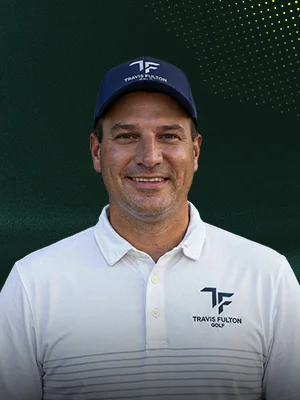
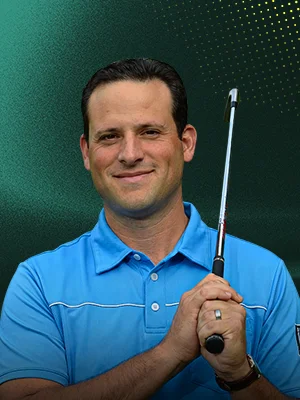
Travis Fulton
Golf Digest Best Teachers in Florida
8 min
Building a bag that has no holes
Matched because two of your clubs cover the same six yards, which leaves seventeen yards under them with nothing to hit.

 GCQuad +
Four cameras, club delivery, and where on the face you struck it. Below: what one session shows you, what a folder of them is worth, and what changes when AVA reads the lot.
FREE FOR 14 DAYS · CARD REQUIRED · CANCEL ANY TIME
One block, two readouts
Both columns describe the same forty minutes in the bay. The left one is accurate and complete. The right one is the one you can act on.
The monitor on its own A faithful record of what happened, and no opinion about which part of it mattered.
The same block, read by AVA The finding
You practised the club you already own. Your 7 and 8-iron carry within six yards of each other, which leaves seventeen yards under them with nothing to hit — and that band is where eight of your last twelve approach shots came from.
Three setups, side by side
The GCQuad measures rather than infers, impact location included. That last one is why a short carry stops being a swing question and becomes a strike question.
Scroll the table →
| Capability | GCQuad, one session | GCQuad, every session | GCQuad + AVA |
|---|---|---|---|
| Carry, ball speed, launch angle | Measured | Measured | Measured |
| Spin rate | Measured | Measured | Measured |
| Club path, face and attack angle | Measured | Measured | Measured |
| Impact location on the face | Measured | Measured | Tied to the carry it cost you |
| The carry you can count on, not the best one | Average only | Average only | P10 to P90, per club |
| Gaps and overlaps across the bag | You eyeball it | You eyeball it | Found and priced |
| Practice priced in strokes per round | No | No | Against a scratch baseline |
| Sessions and course rounds on one timeline | No | No | Scored the same way |
| The point the session stopped paying | No | You can scroll back | Strike quality per block |
| Which two or three things to practise | You decide | You decide | Ranked by what it cost you |
| Instruction matched to the leak | No | No | Top 100 teaching pros |
The middle column is the honest one: a folder of sessions is not a plan. What changes in the third is that every shot is weighed against the golf you actually play, and the order that comes back is what to hit next.
What you get back
Real charts from the app, built from the shots your unit already measured.
Swipe →
Personalized progression
Finding the leak is half of it. AVA matches what your sessions exposed to lessons from nationally ranked teaching professionals, and rebuilds the playlist as your game moves. No lesson fees, no drill library to search.
4 lessons · 31 min
Matched because two of your clubs cover the same six yards, which leaves seventeen yards under them with nothing to hit.
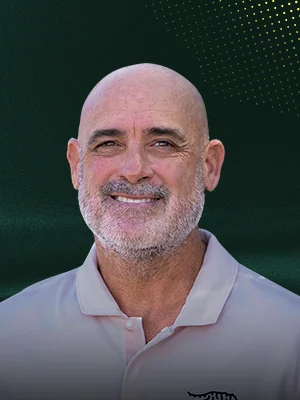
Your short misses are strike, not swing. This is the block that finds the middle of the face before it chases another yard.
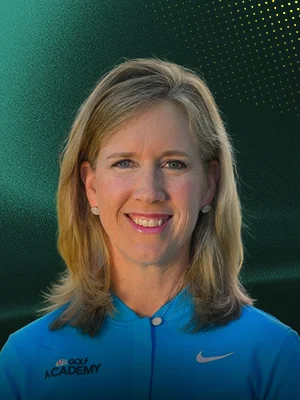
The whole session misses the same direction with every club, which is a setup fix rather than a swing rebuild.
Blocked reps stop paying after sixty balls. This is the structure that keeps the last forty worth hitting.
Lessons are selected against the leak your own data exposed. You do not search a library and guess which video applies to you.
When the most expensive thing in your game stops being the most expensive thing, the playlist changes to whatever is.
Instruction from nationally ranked teachers is part of the membership, not an upsell inside it.
Connect once
Export a session from FSX Play, FSX 2020 or FSX Pro and hand it over in the first step of onboarding. Impact, launch, dispersion and gapping come back weighed against how you actually score.
Start for freeYour sessions stay yours. AVA reads what you upload and never writes back to FSX, nothing is shared with a coach, a club or anyone else unless you send them a link, and you can export or delete everything whenever you want.
One CSV out of FSX, dropped into onboarding. Every shot and every parameter comes with it.
Impact, launch, dispersion and gapping, weighed against how you actually score.
The two or three things worth your next session, ranked by what they cost you.



Free 14 days · Then $25/mo or $150/yr · Every source included
FORESIGHT GCQUAD + AVA GOLF
Most golfers looking at a wide carry spread assume a swing problem and go hunting for path or attack angle. On a GCQuad you never have to guess: the face map tells you whether the short shots came off the toe.
They usually did. A strike a centimetre toward the toe costs real ball speed and adds gear-effect curve, which produces exactly the pattern in the sample session, a distribution that spreads short with a leftward bias.
AVA reads carry spread and impact location together, so the finding comes back as 'your dispersion is a strike problem' rather than a swing theory. That distinction is the difference between a week of face tape and a winter of lessons.
Path and face point at completely different fixes. A face-dominant pattern is often a grip or setup job that takes one session. A path-dominant pattern is a genuine swing change that takes months.
Radar units model these numbers from ball flight. The GCQuad's four cameras see the club, which is why its answer to 'is this face or path?' is worth acting on rather than arguing with.
When the answer is 'aim at the right edge and commit' rather than 'rebuild your downswing', that is worth about a stroke a round and costs you nothing but a change of alignment.
GCQuads live in fitting studios, tour vans and indoor bays. Which means most golfers generate excellent GCQuad data a few times a year and then leave every byte of it behind.
Ask for the CSV before you go. It is your data, it takes thirty seconds to export, and a fitting is the highest-quality file you will produce all year: high volume, controlled conditions, and a professional making sure you were genuinely trying.
Load two or three of those into AVA and you have a real baseline. Then when your carry drops in August, 'is this me or is this the mats?' has an answer instead of a theory.
No, but it is where the GCQuad earns its price. Ball-only files still give AVA carry, gapping, dispersion and spin. With club data and impact location, AVA can separate a strike problem from a swing problem instead of inferring which it is.
Yes, and you should. Ask them to export the session CSV from FSX before you leave: it is the cleanest, highest-volume read on your delivery you will get all year.
No. It sets your gapping and strike baseline; your tracked rounds decide which of those things actually costs you shots. Where the two disagree, AVA reports the disagreement as its own finding.
Any of them. FSX Play, FSX 2020 and FSX Pro all export session shot data as a CSV, and AVA reads whichever parameters your file contains.
The method is identical; the available findings are not. A GCQuad file carries impact location and directly measured club delivery, so AVA can say things about strike that a GC3 file cannot support.
14 days free · Monthly or annual · Everything included
Free for 14 days, then $25 a month or $150 a year. One membership: no tiers, no add-ons, nothing to unlock later. Every source you connect is included.
Start for FreeOwn a different Foresight? See the Foresight overview.