Lesson 01
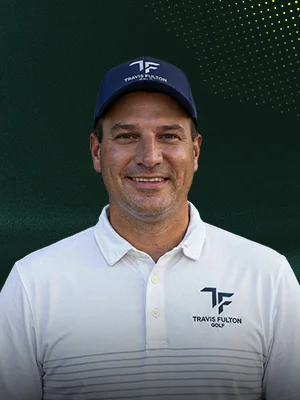
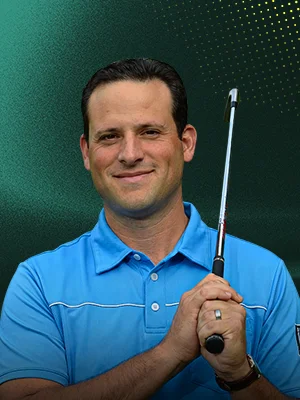
Travis Fulton
Golf Digest Best Teachers in Florida
8 min
Building a bag that has no holes
Matched because two of your clubs cover the same six yards, which leaves seventeen yards under them with nothing to hit.

 GCHawk +
Ceiling-mounted, permanent, and hit from either side without moving anything. A permanent bay means volume — below is what volume is worth before and after AVA reads it.
FREE FOR 14 DAYS · CARD REQUIRED · CANCEL ANY TIME
One block, two readouts
Both columns describe the same forty minutes in the bay. The left one is accurate and complete. The right one is the one you can act on.
The monitor on its own A faithful record of what happened, and no opinion about which part of it mattered.
The same block, read by AVA The finding
You practised the club you already own. Your 7 and 8-iron carry within six yards of each other, which leaves seventeen yards under them with nothing to hit — and that band is where eight of your last twelve approach shots came from.
Three setups, side by side
The GCHawk's advantage is not a parameter, it is friction: nothing to set up means hundreds of shots a month. Volume is only an advantage if something reads it back.
Scroll the table →
| Capability | GCHawk, one session | GCHawk, every session | GCHawk + AVA |
|---|---|---|---|
| Carry, ball speed, launch angle | Measured | Measured | Measured |
| Spin rate | Measured | Measured | Measured |
| Club path, face and attack angle | Measured | Measured | Measured |
| Impact location on the face | Measured | Measured | Tied to the carry it cost you |
| The carry you can count on, not the best one | Average only | Average only | P10 to P90, per club |
| Gaps and overlaps across the bag | You eyeball it | You eyeball it | Found and priced |
| Practice priced in strokes per round | No | No | Against a scratch baseline |
| Sessions and course rounds on one timeline | No | No | Scored the same way |
| The point the session stopped paying | No | You can scroll back | Strike quality per block |
| Which two or three things to practise | You decide | You decide | Ranked by what it cost you |
| Instruction matched to the leak | No | No | Top 100 teaching pros |
Hundreds of shots a month is a pile, not a trend. The middle column is the honest one, and the third is the only one that turns bay hours into a lower card.
What you get back
Real charts from the app, built from the shots your unit already measured.
Swipe →
Personalized progression
Finding the leak is half of it. AVA matches what your sessions exposed to lessons from nationally ranked teaching professionals, and rebuilds the playlist as your game moves. No lesson fees, no drill library to search.
4 lessons · 31 min
Matched because two of your clubs cover the same six yards, which leaves seventeen yards under them with nothing to hit.
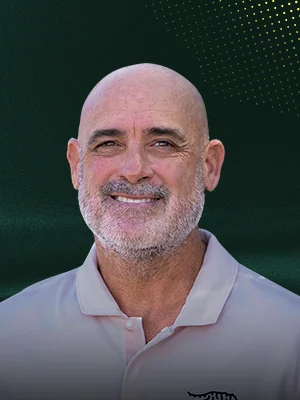
Your short misses are strike, not swing. This is the block that finds the middle of the face before it chases another yard.
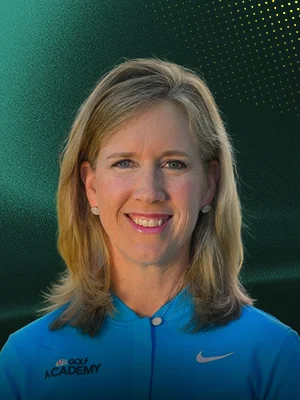
The whole session misses the same direction with every club, which is a setup fix rather than a swing rebuild.
Blocked reps stop paying after sixty balls. This is the structure that keeps the last forty worth hitting.
Lessons are selected against the leak your own data exposed. You do not search a library and guess which video applies to you.
When the most expensive thing in your game stops being the most expensive thing, the playlist changes to whatever is.
Instruction from nationally ranked teachers is part of the membership, not an upsell inside it.
Connect once
Export a session from FSX Play, FSX 2020 or FSX Pro and hand it over in the first step of onboarding. Impact, launch, dispersion and gapping come back weighed against how you actually score.
Start for freeYour sessions stay yours. AVA reads what you upload and never writes back to FSX, nothing is shared with a coach, a club or anyone else unless you send them a link, and you can export or delete everything whenever you want.
One CSV out of FSX, dropped into onboarding. Every shot and every parameter comes with it.
Impact, launch, dispersion and gapping, weighed against how you actually score.
The two or three things worth your next session, ranked by what they cost you.




Free 14 days · Then $25/mo or $150/yr · Every source included
FORESIGHT GCHAWK + AVA GOLF
Same ceiling, same mat, same lighting, same ball, week after week. Every variable that normally muddies a comparison between March and July is held still in a GCHawk bay.
That makes your session history unusually clean evidence. If your smash factor is genuinely up four points since spring, a bay is the one place you can prove it rather than feel it.
AVA reads the whole history as one continuous data set rather than as isolated visits, which is the only way a question like 'is the swing change working?' gets an honest answer.
A ceiling-mounted unit sits out of the way, which means nothing to reposition between a left-hander and a right-hander and nothing to step around mid-session. For a shared bay or a family, that is most of the reason to own one.
The measurement itself is the same photometric approach as the rest of the family: the club and ball are read at impact rather than inferred from flight. Indoors, that is exactly what you want: none of the numbers degrade because the ball hits a screen eight feet away.
So where a GCHawk export lands in the same FSX shape as a GCQuad one, it supports the same conclusions, including the face-strike map that turns a carry-spread problem into a strike problem. GCQuad and GC3 exports are the ones AVA reads today, and a GCHawk file usually sits in that same shape.
The failure mode of a home bay is not too little practice. It is two hundred balls of the same club with no target and no plan, which mostly rehearses whatever you already do.
Look at the strike chart in the sample session: the first sixty balls are the good ones, then smash factor falls off a cliff. Everything past that point is teaching your body a swing you do not own, and it is dragging down the averages you are about to write down.
AVA finds your break point rather than assuming a number, and ranks what to work on by what it costs you. In a bay, where the practice time is effectively unlimited, knowing the order is worth more than the time itself.
Not in what it measures: both are photometric Foresight units reporting the same parameter set through FSX, including impact location. What AVA is tested against today is the GCQuad and GC3 export, and a GCHawk file in that same FSX shape reads the same way.
No. It is the best case. Volume under identical conditions is what turns a snapshot into a trend, and a permanent bay produces exactly that.
Export the ones with intent behind them: gapping sessions, club-specific work, and anything after a change. A bay full of unstructured warm-up balls adds noise rather than signal.
No. AVA reads the file you export and never writes back. Your sessions and your FSX library stay exactly as they are.
That is the point. Bay sessions set your gapping and strike baseline; your tracked rounds decide which of those actually costs you shots. Where the two disagree, AVA reports the disagreement as its own finding.
14 days free · Monthly or annual · Everything included
Free for 14 days, then $25 a month or $150 a year. One membership: no tiers, no add-ons, nothing to unlock later. Every source you connect is included.
Start for FreeOwn a different Foresight? See the Foresight overview.