Garmin logo CT10 club sensors + AVA Golf

Garmin CT10 sensors vs CT10 + AVA

Screw-in sensors tag the club on most of your shots without you doing anything, putter included. They miss the odd chip by the green, a re-hit, a swing with the phone out of range or a flat sensor battery, and a practice swing can trip one. Below is what that changes: what the watch records alone, what the sensors add, and what AVA does with the pair.

FREE FOR 14 DAYS · CARD REQUIRED · CANCEL ANY TIME

One hole, two readouts

Hole 2. A par 4 you made 7 on.

Both columns describe the same nine minutes of golf. The left one is accurate and complete. The right one is the one you can act on.

Garmin logo The tracker on its own
7

Par 4 · 341 yds · 1 penalty · 2 putts

Shots
7
Fairway hit
Yes
Green in reg.
No
Putts
2
Penalty
1

A faithful record of what happened, and no opinion about which part of it mattered.

AVA Golf The same hole, read by AVA
−3.1

Strokes gained · The round's most expensive hole

Off the tee
−0.28
Approach
−0.42
Around the green
−2.00
Putting
−0.45

The finding

You blamed the putts. The hole was lost by one SW from 19 yards, which cost 2.0 strokes on its own. Nothing on a scorecard shows you that shot.

Three setups, side by side

What the sensors actually buy you

CT10s tag the club automatically, so nothing depends on remembering. That is what makes putting strokes gained possible and turns a vague miss into a yardage.

Scroll the table →

Capability Watch aloneWatch + CT10 sensorsWatch + CT10 + AVA
Score, fairways, greens, putt count Recorded, fairways and putts by hand Recorded, fairways by hand Recorded
Shot locations and hole context Recorded Recorded Recorded
Club on most shots Not recorded Detected automatically Recorded
Every shot priced in strokes vs scratch No No By category, hole by hole
Putting strokes gained No Putter logged, not priced Yes, with the sensors
Which two or three things to practise You decide You decide Ranked by what it cost you
Measured yardages checked against the course Profile distances only Profile distances only Course vs practice, as a finding
Rounds and range sessions on one timeline No No Scored the same way
Instruction matched to the leak No No Top 100 teaching pros

This is the strongest amateur setup on the rounds side: score, hole context, shot location and a club on most shots, putter included. Chips near the green, re-hits and out-of-range swings still arrive bare, and AVA simply has less to say about those.

What you get back

What your data looks like inside AVA

Real charts from the app. The first two get sharper once the club is attached to the shot; the third works from scores alone.

Swipe →

Club gapping · Needs club data The yardages you actually carry 3W 5W 4H 6i 7i 9i PW SW 25 YD HOLE 24 YD HOLE 100 150 200 YDS
Median carry with the P10 to P90 spread, measured on turf rather than a mat. Two yardages in this bag cannot be covered by any club.
Approach dispersion · Needs GPS rounds Your miss has a direction PIN AVG MISS 22 FT RIGHT RINGS: 15 / 30 / 50 / 70 FT
Your approaches plotted in your own frame, pin at the centre. One round shows you the shape of a miss; a handful of them is what turns that shape into an aim point.
SG over time · Works bare Your backlog becomes a trend 0 -5 12 ROUNDS AGO LATEST
One point per round with the trend through it. This one needs no sensors at all, which is why the history already in your account is worth connecting for.
See these on your rounds Free for 14 days

Personalized progression

Then someone shows you how to fix it

Finding the leak is half of it. AVA matches what your rounds exposed to lessons from nationally ranked teaching professionals, and rebuilds the playlist as your game moves. No lesson fees, no drill library to search.

This week Off the tee — 2 of 7 fairways, and the approach bill behind it −2.6

4 lessons · 31 min

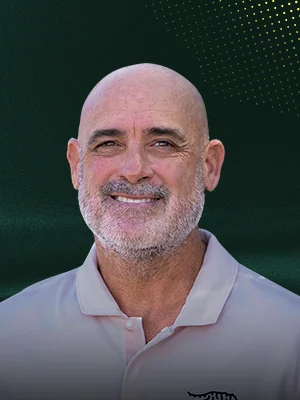
Cheryl Anderson
Lesson 01
Cheryl Anderson
Golf Digest 50 Best Teachers in America
7 min
Finding the short grass off the tee

Matched because you hit 2 of 7 fairways. Everything the approach numbers below cost you started here, on a lie you did not choose.

Tom Stickney
Lesson 02
Tom Stickney
Golf Magazine Top 100 alum
9 min
The long approach from a bad lie

Matched because ten of your sixteen approaches were played from rough, and the 225+ yard band cost −2.7 on its own.

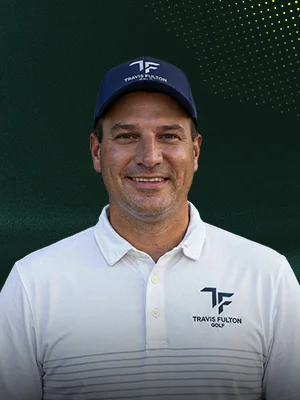
Travis Fulton
Lesson 03
Travis Fulton
Golf Digest Best Teachers in Florida
8 min
Playing the number, not the yardage

Two approaches this round flew roughly fifty yards past the distance you were playing to. Your watch measures total distance, ball to ball — this is the session that reconciles it with the card.

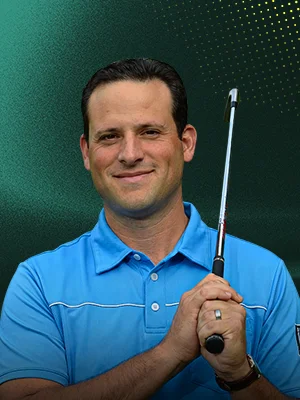
Jason Birnbaum
Lesson 04
Jason Birnbaum
Golf Magazine Top 100 Teacher
7 min
A range session with a scorecard

The drill that closes the loop: a structured block you can log, so next week AVA can tell you whether it worked.

Matched, not browsed

The playlist follows the data

Lessons are selected against the leak your own data exposed. You do not search a library and guess which video applies to you.

It moves

Next week is a different plan

When the most expensive thing in your game stops being the most expensive thing, the playlist changes to whatever is.

Included

No lesson fees

Instruction from nationally ranked teachers is part of the $25 a month, not an upsell inside it.

Get my first playlist

Connect once

Authorise Garmin. Then never touch it again.

Garmin is a native sync, not an export job. Every round you play arrives on its own, scored the same way, next to your practice sessions. AVA reads your rounds and never writes back.

Connect Garmin

AVA reads your rounds and never writes back. Nothing is posted to Garmin, nothing is shared with a coach or a club unless you send it, and you can disconnect or delete everything whenever you want.

01

Connect Garmin

Authorise the connection once. No exports, no files, no setup call.

02

AVA reads every shot

Strokes gained by category against a scratch baseline, hole by hole.

03

One plan for this week

The two or three things worth your next bucket of balls, ranked by what they cost you.

GarminTrackmanSkyTrakForesightGolfPad

Free 14 days · Then $25/mo · One plan, every source included

GARMIN CT10 + AVA GOLF

Turn your Garmin CT10 rounds into lower scores

The finding that needs a club attached

Look at the approach chart above: nine of sixteen approaches finished off the green, the ones that missed averaging around fifty-five yards from the pin, and eleven of the sixteen started from rough or sand. That is not one strike fault, and it is not bad luck.

[object Object]

You can only see that if something knows which club was in your hands. A watch alone tells you the approach missed; sensors tell you it was the 8-iron, played from ninety-nine yards and flown a hundred and forty-nine, which points straight at 'take one less'.

Screw them in once and forget them

CT10s replace the grip-end cap on each club and tag the shot when the watch registers a swing. There is no charging routine, nothing to remember on the first tee, and no app to open mid-round.

That matters because the value of club data is entirely a function of completeness. Data for the clubs you remembered to log is worse than no data, because it looks like a pattern when it is really a sampling bias.

Automatic capture across a whole season is what makes club-level findings trustworthy, and it is why sensors tend to change a profile more than a more expensive watch does.

Driver is usually not the problem

The most common self-diagnosis in amateur golf is a driving problem. Club-level data usually disagrees, and it disagrees in a specific way.

Off the tee, the cost is concentrated in a small number of holes where the trouble is genuinely reachable, and the fix is a club choice, not a swing. The round above makes the point: the 3-wood off the 1st found rough, and the six iron played out of it went out of bounds — one penalty stroke and −2.00 on that shot alone.

AVA prices that decision hole by hole, which turns an argument about your swing into a plan for your tee shots. It is the fastest scoring change available to most golfers and it requires no practice at all.


CT10 questions, answered

How many sensors do I need?

As many as you want covered, but completeness is what makes the data trustworthy. Partial coverage looks like a pattern when it is really a sampling bias, so aim to tag the clubs you actually hit.

Do they need charging?

No. They replace the grip-end cap and tag shots automatically when the watch registers a swing: nothing to remember on the first tee.

What can AVA tell me with sensors that it can't without them?

Which club produced each miss it caught. That converts 'your approach play costs you five shots' into 'your 7-iron out of the rough finishes 20 yards left': a description becomes an instruction.

Do they work with any Approach watch?

They pair with Garmin Golf-compatible Approach devices. AVA reads the round from your Garmin account rather than the hardware, so what matters is that the club tags reach the round.

Is it worth it if I already have a launch monitor?

Especially then. Practice data gives you your ceiling per club; sensors give you what the club does on real turf under real pressure. The gap between the two is one of the most useful numbers in your profile.

14 days free · One price · Everything included

Put a club on your shots, then change the ones costing you

Free for 14 days, then $25 a month. One plan: no tiers, no add-ons, nothing to unlock later. Every source you connect is included.

Start for Free

Own a different Garmin? See the Garmin overview.

Turn club-level data into a plan Start free